
Parenting Guide: ParentRise
CRX ApplicationsParenting
4.25.00 Reviews
- Version
- 2.3.4
- Installs
- 10.00K
- Age Rating
- Everyone
Screenshots

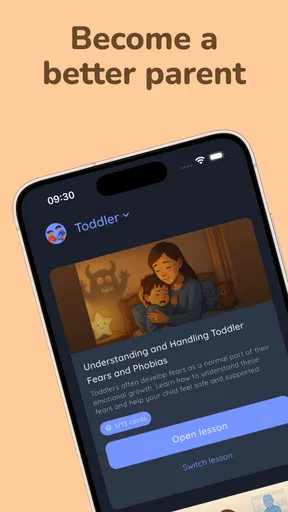
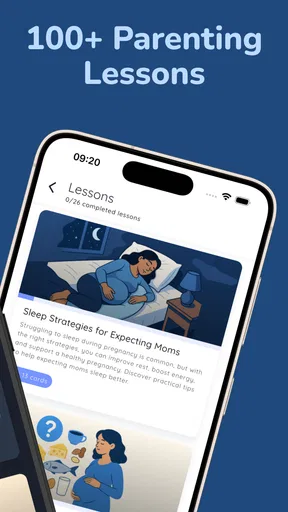
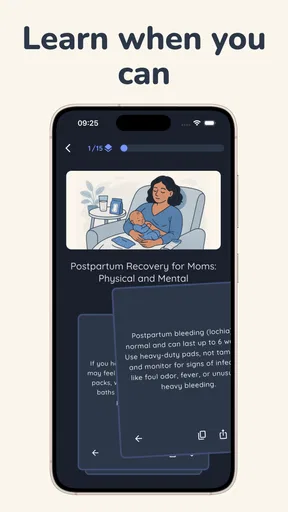
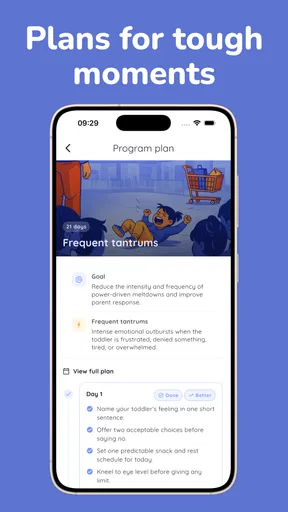
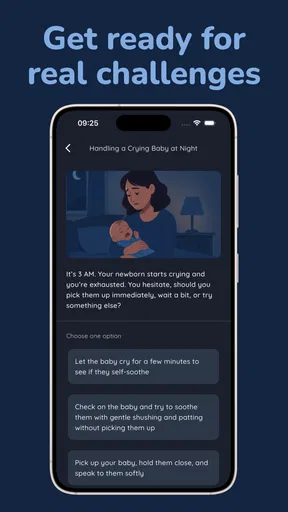
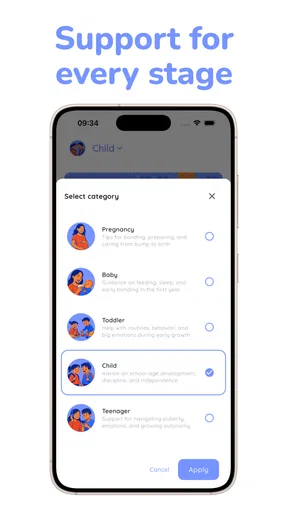
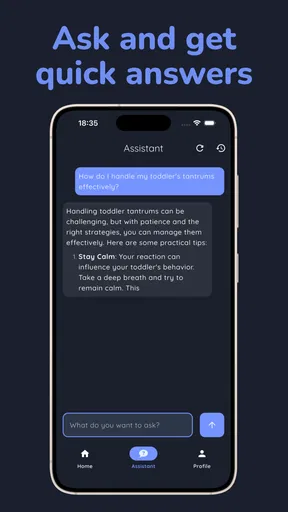
Our Review of Parenting Guide: ParentRise
 Analysis by Appyee
Parenting advice is easy to find, but useful advice at the exact moment you need it is much harder to organize. That is the problem I felt Parenting Guide: ParentRise is trying to solve. This free parenting app from CRX Applications gathers guidance for different points in family life, beginning with pregnancy and continuing through childhood and the teenage years. Instead of treating parenting as one fixed subject, it follows the fact that the questions change as a child grows.
I spent time with it as a practical reference rather than as something to read from beginning to end. That distinction matters. ParentRise is most helpful when I want a short lesson, a reminder, or a calmer way to think about a familiar parenting challenge. It is less convincing as a replacement for a pediatrician, a qualified counselor, or a detailed book about one particular issue. Its value is in giving parents a broad, approachable starting point across many stages.
The app has an average rating of 4.2 from around two hundred ratings, and it has passed ten thousand installs. Those figures suggest a modest but real audience rather than a huge parenting platform. It is rated for Everyone, which fits the tone and subject matter, although parents still need to judge whether any particular advice suits their child and family situation.
One continuous guide from pregnancy to the teen years
I find the most useful way to think about this section is as a map for changing questions, not a promise that one guide can answer every parenting concern. I’ll look at how that broad, stage-spanning approach works in ordinary family life, then consider what happens when access to the app depends on a phone and a connection.
The capability that makes ParentRise different
The central capability is the stage-based approach. ParentRise is not presented as a narrow baby tracker, a pregnancy calendar, or a teen communication tool. Its useful idea is continuity: a parent can use the same app while the questions move from preparing for a baby to handling school-age routines and later adolescent independence.
That breadth changes how I use it. With a single-stage app, I usually open it for one specific task and stop using it once that period ends. ParentRise has a better chance of remaining relevant because the subject can move with the family. A parent expecting a first child can look for early guidance, while a parent of an older child can focus on a completely different concern without installing a separate app for every phase.
The trade-off is that broad coverage can feel less deep than a specialist resource. A pregnancy-focused application may offer a more concentrated experience for pregnancy. A sleep-focused guide may be more detailed about routines. ParentRise makes a different promise in practice: it is a general parenting companion, not an expert system built around one narrow problem.
I think that makes the app especially suitable for parents who feel overwhelmed by scattered advice. Rather than searching the web, opening several articles, and trying to remember which ideas apply to which age, I can begin with the relevant stage and use the lessons as a way to frame the issue. The real strength is not simply having many topics; it is having one place that keeps the child’s changing stage in view.
How the lessons fit into everyday decisions
ParentRise works best when I approach it with a question in mind. For example, I might open it after a difficult morning and look for guidance connected to routines, communication, or a developmental transition. The lesson then becomes a prompt for reflection rather than a command that must be followed exactly.
That is an important distinction for parenting content. Advice can sound reassuring when read in isolation but become unrealistic when applied to a tired family, a child with a different temperament, or a household with limited time. I found it more useful to take one principle from a lesson and turn it into a small experiment for the day. If the idea is about improving communication, I can try changing one conversation instead of attempting to redesign the entire family routine.
A practical workflow is to read when calm, choose one action, and revisit the topic later. Reading during a stressful moment may help me pause, but it is not the best time to absorb a long explanation or make a major parenting decision. I would use the app as a preparation tool: read a lesson before a predictable challenge, then see whether the suggested approach fits what happens at home.
This also answers a question many parents have about whether a general guide can be genuinely useful. It can, but only if the parent treats it as a source of ideas and structure. It cannot observe a child, understand the full family history, or adjust advice with the precision of a professional who knows the situation. The app can help me ask better questions; it cannot provide a personal assessment.
A realistic family scenario
Imagine a parent whose child is entering a new school stage. The child is more independent in some moments but still needs help with routines, emotional regulation, and confidence. The parent does not necessarily need a large parenting course. They need a manageable way to think through the transition without jumping between unrelated searches.
This is where I see ParentRise fitting naturally. I would open the app in the evening, choose guidance that matches the child’s current stage, and read it away from the immediate conflict. The next morning, I might apply one small suggestion, such as giving the child a clearer choice or making time for a calmer conversation. Later, I could return to the app and compare the idea with what actually happened.
The benefit is not that one lesson magically fixes the morning. The benefit is that the parent starts with a deliberate response instead of reacting automatically. That small shift is easy to underestimate. Parenting advice is often most valuable when it changes the timing or tone of a response, not when it provides a perfect solution.
For a parent of a teenager, the same workflow could be used differently. The goal may be to think about boundaries, trust, or communication before a difficult discussion. A broad guide can be useful here because the problem is rarely only about one behavior. It may involve independence, family expectations, and the parent’s own anxiety at the same time.
What I would do before relying on it regularly
I would first identify the stage that best matches my child and avoid reading everything at once. A large amount of parenting content can create the feeling that I am always behind. ParentRise is more manageable when I use it selectively and keep a simple note of which ideas I want to try.
I would also separate low-risk everyday suggestions from matters that need professional attention. General guidance may help with routines, conversations, and planning. It should not be treated as a diagnosis or as a substitute for medical, developmental, or mental-health care. If a child’s safety, health, or serious emotional distress is involved, the app should be a starting point for seeking appropriate help, not the final authority.
Another useful habit is to compare the app’s suggestions with the child’s actual response. If an approach consistently increases distress or conflict, I would stop and reconsider rather than assuming I had applied it perfectly. Parenting is not a test in which following instructions guarantees a result. The child’s age, personality, environment, and relationship with the parent all matter.
Where it compares well with usual alternatives
The usual alternatives are search engines, social media discussions, books, specialist apps, and advice from professionals or experienced relatives. ParentRise sits between those options. It is more organized than a random search and less demanding than working through a full parenting book. It is also broader than an app built only for pregnancy, feeding, sleep, or school organization.
That middle position is useful for a parent who wants a quick orientation. A search engine can produce too many conflicting opinions, while social media can mix personal stories with advice that is not suitable for every family. A broad app gives me a more contained place to begin. On the other hand, a specialist app or a professional consultation is often better when I already know the exact problem and need depth, tracking, or individualized support.
I would not choose ParentRise as my only resource for a complex issue. I would choose it when I want to understand the kind of question I should be asking and find a practical first step. That makes it a companion to stronger resources rather than a competitor to all of them.
Trade-offs in the free model
The app is free to install and use, but it includes in-app purchases ranging from $4.99 to $39.99 per item. That is worth considering before building a long-term routine around it. A parent may be comfortable exploring a free app but less comfortable paying for additional material without first knowing how much depth it adds.
My advice is to begin with the freely available experience and judge whether the tone, organization, and stage coverage fit your needs. If the app becomes part of your regular parenting routine, then a paid item may make sense for you. I would still compare that cost with a book, a course, or a professional conversation, depending on the problem. The cheapest option is not always the most useful, especially when the issue is highly personal.
The broad scope is another trade-off. It is convenient to have pregnancy-to-teen coverage, but parents looking for detailed technical guidance may find the general approach too light. The app’s value depends on wanting a flexible overview. If I only need pregnancy tracking, a developmental milestone tool, or a dedicated family calendar, I would look elsewhere.
There is also a mental-load trade-off. Parenting advice apps can encourage constant self-monitoring, particularly when every difficult moment feels like evidence that something needs fixing. I would use ParentRise in moderation, with the aim of making one situation clearer rather than judging my entire performance as a parent.
Who gains the most from the stage-based format
ParentRise is a strong fit for new parents who want a broad introduction to parenting topics without committing immediately to several specialist resources. It can also help parents moving into a new stage, such as starting school or navigating adolescence, because it offers a reason to pause and prepare instead of relying only on instinct.
It may be particularly useful for parents who prefer short, focused lessons over long books. The format encourages small sessions, which suits a busy household where uninterrupted reading time is rare. I can imagine using it while waiting for an appointment, during a quiet part of the evening, or before a planned conversation with a child.
It is less suitable for someone who wants highly personalized recommendations, detailed tracking, or direct access to professionals. It is also not the right choice for a parent who dislikes broad advice and already has a trusted specialist resource for the child’s current stage. In that situation, another app may offer more depth and less material to sort through.
Parents should also think about whether they want an app covering multiple stages when only one stage is relevant right now. The wider scope is a benefit for continuity, but it can make the experience feel less focused. I would recommend it to someone who values an all-round parenting reference, not to someone searching for a single-purpose tool.
Practical details before installing
ParentRise is currently at version 2.3.4 and supports Android 7.0 or later. That makes it accessible to people using older Android devices, which is helpful in a household where a parent may rely on a spare phone rather than a recent model. The app is categorized for parenting, and the Everyone content rating makes its intended audience clear.
The developer is CRX Applications. I would still check the app’s current behavior on my own device before paying for any optional content, especially if I depend on it daily. A good parenting app should fit quietly into family life; if it feels difficult to navigate or turns every visit into a sales decision, that friction can reduce its usefulness even when the subject matter is relevant.
I would also avoid treating the install count or rating as a guarantee that it will match my family. Around ten thousand installs and a 4.2 average indicate that other users have found value in it, but parenting needs are personal. The most important test is whether the lessons help me make calmer, more realistic decisions for my child.
My final view after using it as a companion
I like ParentRise most when I use it as a steady source of perspective across changing child stages. Its strongest idea is simple but practical: parents do not stop needing guidance when a child leaves one stage, so the reference should not become irrelevant after a single phase. Pregnancy, early childhood, school years, and adolescence bring different questions, and the app’s broad structure reflects that progression.
It does not replace professional care, focused specialist tools, or the experience of knowing my own child. Its lessons need to be interpreted, tested gently, and adapted to real family circumstances. The in-app purchase range also means I would explore the free experience first rather than assuming the entire resource is included without additional cost.
Even with those limits, I would recommend ParentRise to a parent who wants approachable guidance in one place and prefers small lessons to scattered online searches. I would skip it if I needed detailed tracking or a personalized answer to a serious concern. For everyday reflection, preparation, and a useful nudge toward a calmer response, it earns a place on my shortlist of parenting apps.
Verdict
Strengths of Parenting Guide: ParentRise
- Practical parenting tips are organized for quick, everyday reference.
- Content can help parents feel more confident handling common challenges.
- Useful guidance may support better communication with children.
- The app offers a convenient alternative to searching across parenting websites.
- Suitable for parents seeking ideas for different stages of childhood.
Limitations of Parenting Guide: ParentRise
- Advice may feel too general for complex family or developmental situations.
- Some recommendations may not match every parenting style or culture.
- The usefulness depends on how frequently the content is updated.
- It should not replace professional medical or psychological guidance.
- Certain features or content may require an internet connection.
Similar Picks in This Category
View All
Family Space
Motorola Mobility LLC.3.9

شرطة الأطفال - مكالمة وهمية
Oub Apps4.1

Findmykids: Parental Control
LETEM LTD4.6

Pregnancy + | Tracker App
Philips Electronics UK Limited4.8

Policía de niños - para padres
Kids police4.7

Pregnancy App
Amila4.9
Frequently Asked Questions
What is Parenting Guide: ParentRise, and who is it designed for?
Parenting Guide: ParentRise is a parenting support app intended to help mothers, fathers, and caregivers handle everyday family situations with practical guidance. It may be useful for parents of young children, school-age kids, or teenagers who want ideas about routines, communication, behavior, emotional development, and family organization. The app should be viewed as an educational resource rather than a replacement for personalized medical, psychological, or professional advice.
What kind of parenting information and tools can I find in ParentRise?
The app focuses on common parenting questions and day-to-day challenges, offering guidance that can help users think through topics such as discipline, communication, child development, emotional support, routines, and family relationships. Depending on the version and platform, content may be organized into articles, recommendations, checklists, or practical suggestions. Parents should review the information carefully and adapt it to their child’s age, personality, needs, and family circumstances.
Is Parenting Guide: ParentRise suitable for every child and parenting situation?
ParentRise can provide useful general ideas, but no parenting app can account for every child, culture, household, or difficult situation. Advice that works for one family may not be appropriate for another, particularly when a child has developmental differences, behavioral concerns, trauma, learning difficulties, or health conditions. Use the app as a starting point, and consult a pediatrician, therapist, counselor, or other qualified professional when more specific support is needed.
Does ParentRise require an internet connection, account, or paid subscription?
The exact requirements may vary according to the current Android or iOS version, regional availability, and changes made by the developer. Some features or content may be available only after creating an account, while additional guides or tools could require in-app purchases or a subscription. Before downloading or starting a trial, check the store listing, privacy information, and payment terms carefully, including renewal conditions and whether content can be accessed offline.
Is my family information private when using Parenting Guide: ParentRise?
Before entering personal details, parents should review ParentRise’s privacy policy and the permissions requested by the app. Avoid sharing unnecessary information about your child, including full names, school details, medical records, photographs, or precise location, unless you clearly understand how that data is collected and used. If the app includes accounts, questionnaires, personalization, or community features, also check data-retention, third-party-sharing, deletion, and parental-control options.
